
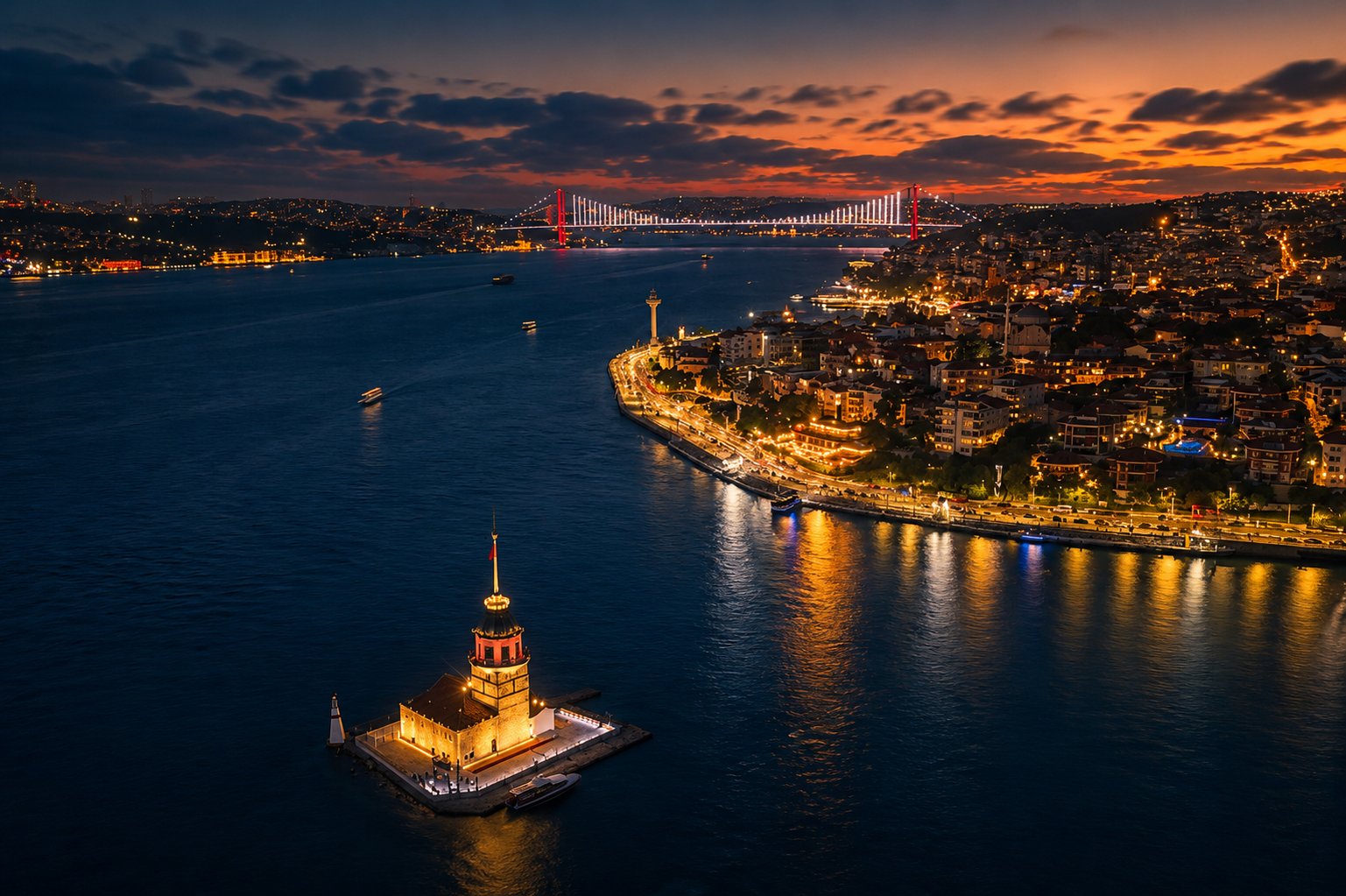
Everyone knows Sultanahmet. Far fewer visitors realise that just across the water sits a second historic core, every bit as old and in some ways more layered, climbing the hill from the waterfront up to the famous tower. This is Galata, with Karakoy spread along the shore below it, and walking it is like reading a different chapter of Istanbul's story.
Where the old city tells you about emperors and sultans, Galata tells you about merchants, bankers, sailors, and immigrants. It was for centuries the foreign quarter, the place where Genoese traders, then Europeans, Jews, Armenians, and Greeks built their own world facing the imperial city across the Golden Horn. That mix is still written into the streets, the buildings, and the small surprises you find when you look closely.
I often suggest this district to people who have already done Sultanahmet and want to understand how Istanbul actually became a world city. It complements the monuments perfectly, and it is mostly a downhill walk.
The Genoese Colony and the Tower
Galata began as a colony of Genoa, the Italian maritime republic that controlled much of the trade through these waters in the late medieval period. The Genoese were granted this hillside as a semi-independent enclave, and they fortified it, ran their own affairs, and grew rich on commerce.
The great surviving symbol of that era is the Galata Tower, completed in 1348 as part of their defences. For centuries it was the tallest structure around, used over the years as a watchtower and lookout. From its top you get the classic panorama back across the Golden Horn to the domes and minarets of the old city, which is exactly the view the Genoese once kept watch over. The tower anchors the whole district, and the streets that spiral down from it still follow the medieval pattern.
The Bridge and What It Connects
At the foot of the hill is the Galata Bridge, spanning the mouth of the Golden Horn to link this district with the old city. It is far more than a crossing. The bridge is lined with anglers casting into the water at all hours, and its lower level is packed with fish restaurants and tea houses.
Crossing it on foot is one of the most honest ways to feel the city's geography. On one side rises the imperial peninsula of Sultanahmet, on the other the commercial slope of Galata. For most of Istanbul's history these were two different worlds, the Ottoman city and the foreign quarter, and the bridge is where they met. It still feels like a seam between two halves of the same place.
A Quarter of Many Communities
Galata and Karakoy were home to communities from across the eastern Mediterranean and Europe, and their traces remain if you know where to look.
The Jewish Quarter
This area was a center of Istanbul's Jewish life for centuries, home to both Sephardic families who arrived after the expulsions from Spain and Ashkenazi communities from central and eastern Europe. Synagogues survive in the back streets, quiet reminders of a community that helped make the district what it was.
The Underground Mosque
Down near the water is the Yeralti Camii, set in the vaulted basement of a Byzantine fortification. Low ceilings, forests of squat pillars, and a hushed atmosphere make it one of the most unusual sacred spaces in the city, and most visitors walk past it without ever knowing it is there.
The Banking Street
Bankalar Caddesi, the old banks street, was the financial heart of the late Ottoman Empire. The grand stone facades of former banks line the slope, a stretch of nineteenth-century European architecture that shows how thoroughly money and commerce shaped this side of the water.
Modern Galata and the Walk to the Water
Today the area around the tower has become one of the city's most creative quarters, full of small galleries, design shops, cafes, and studios tucked into the old buildings. It manages to be fashionable without losing its texture, and the contrast between the medieval lanes and the contemporary life inside them is part of its appeal.
The natural way to experience it is to start at the tower and walk downhill toward Karakoy and the waterfront, ending at Galataport, the redeveloped cruise and dining quarter along the Bosphorus. That descent takes you from the medieval Genoese summit through the banking and immigrant streets down to the modern shore in one continuous, easy walk, which is why it sits so well alongside a day in the old city.
Before You Go
Walking Galata and Karakoy
- Start at the top by the Galata Tower and walk downhill toward the water. It is far easier than climbing up.
- Wear good shoes. The lanes are steep, cobbled, and uneven in places.
- Look for the small sites most people miss, especially the underground mosque near the shore and the synagogues in the back streets.
- The Galata Bridge is best crossed on foot for the full sense of how the two halves of the city connect.
- Leave time for a coffee stop. The cafe culture here is part of the experience, not a distraction from it.
- Pair this district with a morning in Sultanahmet for a day that covers both the imperial and the cosmopolitan sides of Istanbul.
Common Questions
Questions and Answers
How old is the Galata Tower?
The current tower was completed in 1348 by the Genoese as part of their fortifications. It served for centuries as a watchtower and remains the defining landmark of the district.
Is Galata worth visiting if I have already seen Sultanahmet?
Very much so. Galata tells the city's commercial and cosmopolitan story rather than its imperial one, and it makes an ideal complement to a day among the monuments of the old city.
What is the underground mosque?
It is the Yeralti Camii, a mosque set inside the vaulted basement of a Byzantine fortification near the waterfront. Its low ceilings and many pillars make it one of the most atmospheric and overlooked sacred spaces in the city.
Is the Galata area a hard walk?
It is hilly and cobbled, but if you start at the tower and walk downhill toward Karakoy and the water, it is comfortable for most visitors and mostly a descent.
What is at the bottom of the hill?
You reach Karakoy and Galataport, the redeveloped waterfront with restaurants and views over the Bosphorus, which makes a natural end point for the walk down from the tower.