Sixteen Days Through the Civilizations of Anatolia
Turkey is most often experienced in fragments. Travelers arrive in Istanbul and leave from Istanbul, carrying away the impression of a city rather than a country. Others land in Bodrum or Antalya and spend their time in the warmth of the Mediterranean, conscious that something vast and ancient exists beyond the coast but never quite reaching it. A smaller number make it to Cappadocia and are astonished by what they find. But the full story of Anatolia, the story that connects all of these places and remains largely untold.
Anatolia is not a backdrop. It is one of the longest continuously inhabited landscapes on earth, layered with civilizations that shaped the entire course of human history.
The Complete Anatolian Odyssey was designed to tell that story in full. Over sixteen days, the journey moves from Istanbul through the Dardanelles to ancient Troy, south along the Aegean to Pergamon and Ephesus, inland to Pamukkale's thermal terraces, east toward the Mediterranean coast with its Lycian ruins, north through the Anatolian plateau to Konya and the Seljuk world, deep into Cappadocia's volcanic landscape, further north to the Hittite capital of Hattusa, across to the Ottoman heritage town of Safranbolu, and finally to Ankara before returning to Istanbul.
Each stop was chosen deliberately. Gallipoli for the weight of recent history and what the 1915 campaign meant for four nations. Troy for the strange, enduring power of a story that shaped Western literature and imagination. Pergamon for the ambition of the Hellenistic world that built a library to rival Alexandria. Ephesus for the marble streets of a Roman city preserved at a scale that nothing else in the Mediterranean can match. Pamukkale for the confluence of the natural and the ancient at the Roman spa city of Hierapolis. The Mediterranean coast for the Lycian civilization that found its own extraordinary idiom in the rock tombs and stone cities of the mountainous coastline.
Then Konya, which was once the capital of the Seljuk Sultanate of Rum and the home of Jalāl ad-Dın Rumi — the poet and mystic whose influence on Islamic spirituality and world literature cannot be overstated. Then Cappadocia, which confronts every visitor with something they have never seen anywhere else on earth: valleys carved by volcanic action and human ingenuity into a landscape of fairy chimneys and underground cities, decorated with Byzantine frescoes and inhabited without interruption from prehistoric times. Then Hattusa, the Hittite capital whose rediscovery in the twentieth century rewrote our understanding of ancient civilizations. Safranbolu, an Ottoman market town preserved so completely that it is listed as a UNESCO World Heritage Site and stands as one of the finest examples of late Ottoman urban life in the country. And finally Ankara, where the Turkish Republic was declared in 1923 and where Anıtkabir, the monumental mausoleum of Mustafa Kemal Atatürk and stands as one of the most powerful architectural statements of the twentieth century.
This is the most complete private cultural journey available through Dese Tour. It is designed for travelers who want to understand Turkey rather than simply visit it.
Most Turkey itineraries are built around one or two regions. Istanbul is treated as a starting point, Cappadocia as a destination, the Aegean as a landscape. Each of these is a valid choice, and each produces a genuinely rich travel experience. But none of them produces a complete picture of what Turkey is.
The Complete Anatolian Odyssey is different in its intent. It is built around the idea that Turkey's significance is not architectural or natural in isolation — it is civilizational. The country contains more UNESCO World Heritage Sites than most people expect. It holds the remains of civilizations that preceded Greece and Rome. It was the center of the Byzantine and Ottoman Empires. It gave the world one of its most significant mystical traditions and one of its finest ancient literary legends. It was the birthplace of a republican revolution that remains one of the most consequential political transformations of the twentieth century.
This journey connects those chapters. Not as a series of checkboxes, but as a coherent narrative. Your guide is not simply explaining what you are looking at — they are showing you how each place connects to the next, how the Hittites influenced the Greeks who influenced the Romans who built Ephesus, how the Byzantine churches of Cappadocia survived because they were hidden underground, how the road you are driving on follows an ancient caravan route that once connected two continents.
Sixteen days is not a long time to travel across a country this layered. But it is enough to understand it — and to come away with a story of Turkey that most visitors never receive.
Two days in the city that was capital of three empires. Hagia Sophia, Topkapi Palace and the Imperial Harem, the Basilica Cistern, Süleymaniye Mosque, Fener and the Grand Bazaar — the full Byzantine and Ottoman story told with depth and sequence.
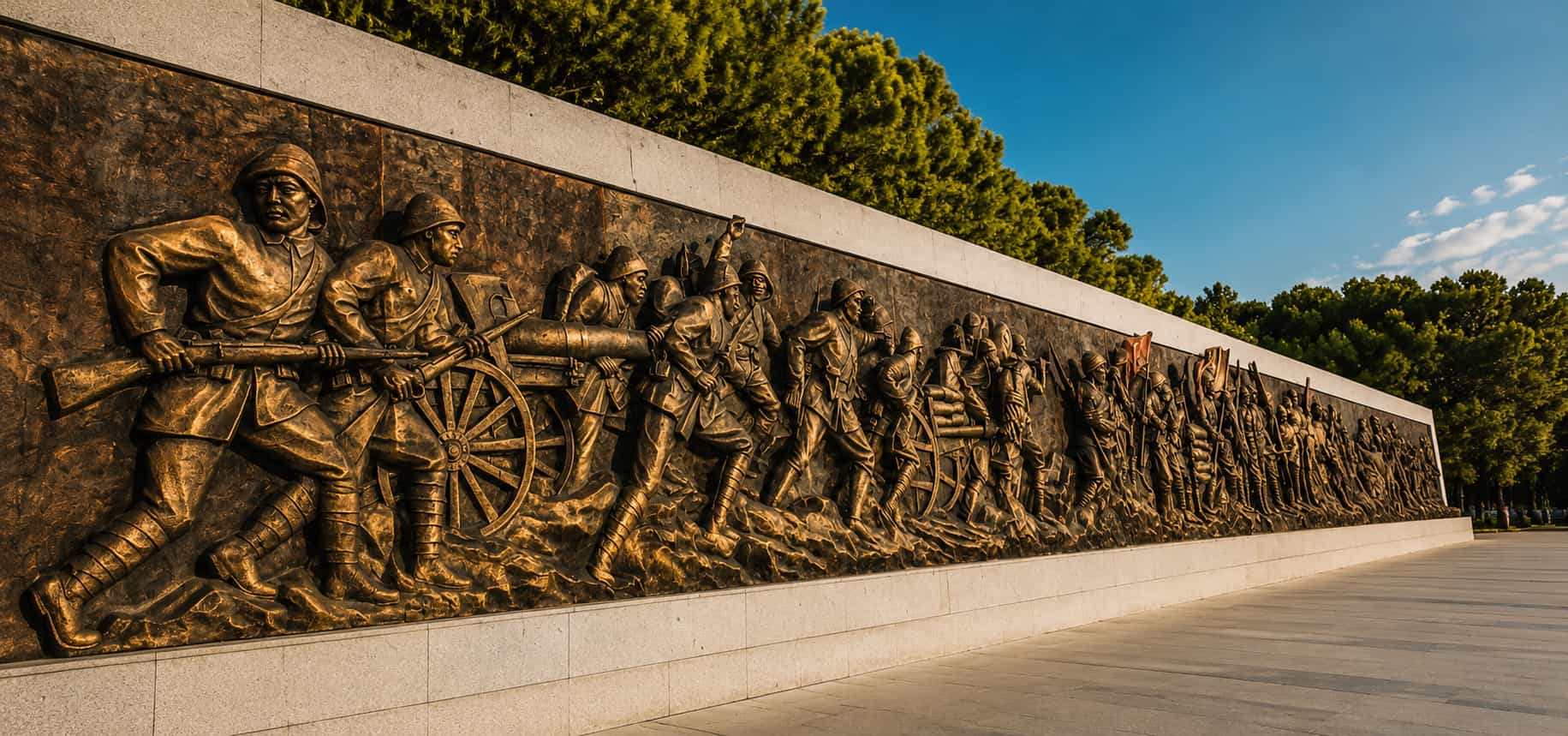
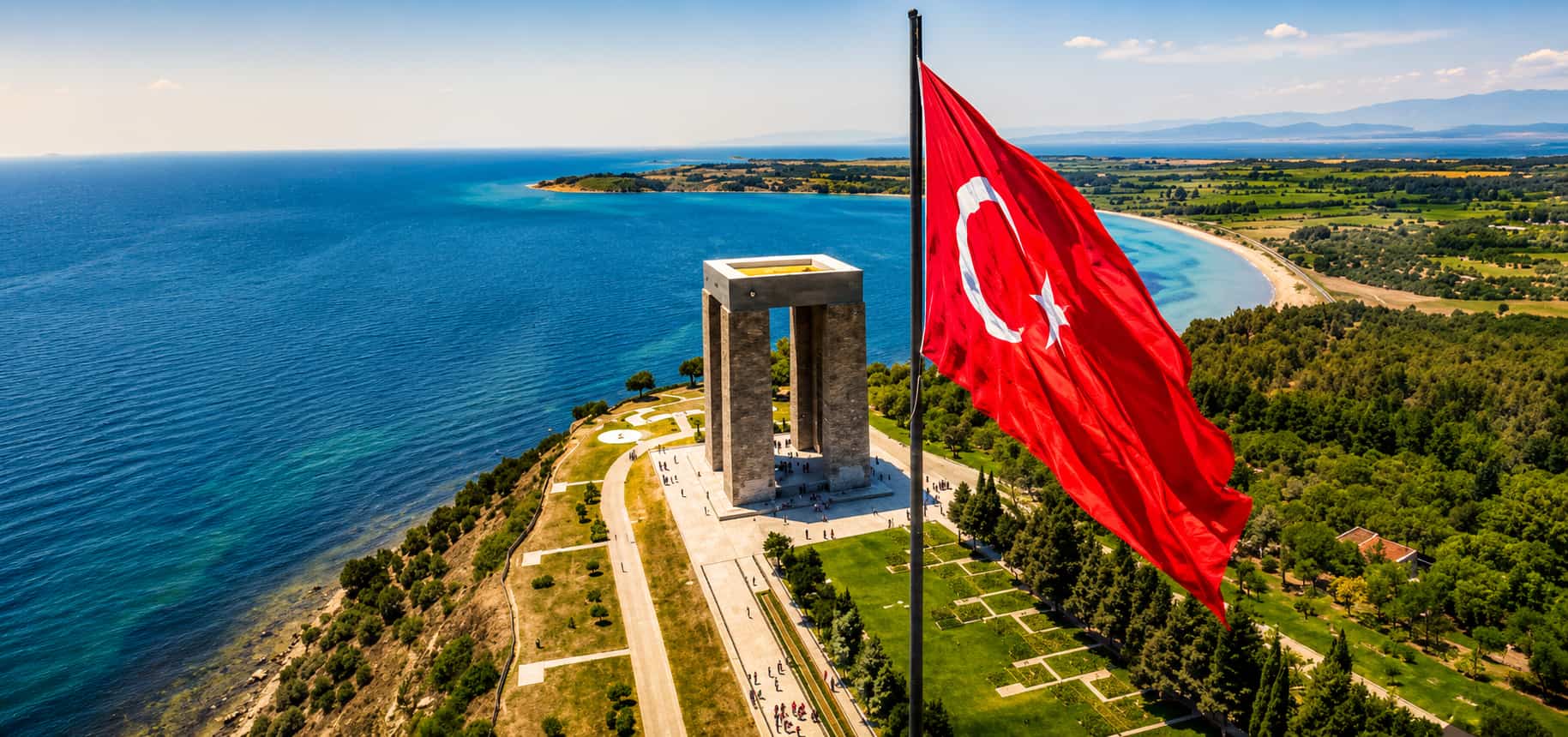
A day among the cemeteries, memorials and silences of the 1915 campaign. One of the most historically significant and emotionally resonant days of the entire journey — important for travelers from any country.
The archaeological site of a city whose story became the foundation of Western literary tradition. Your guide explains the nine layers of Troy and what their excavation revealed about the ancient Aegean world.
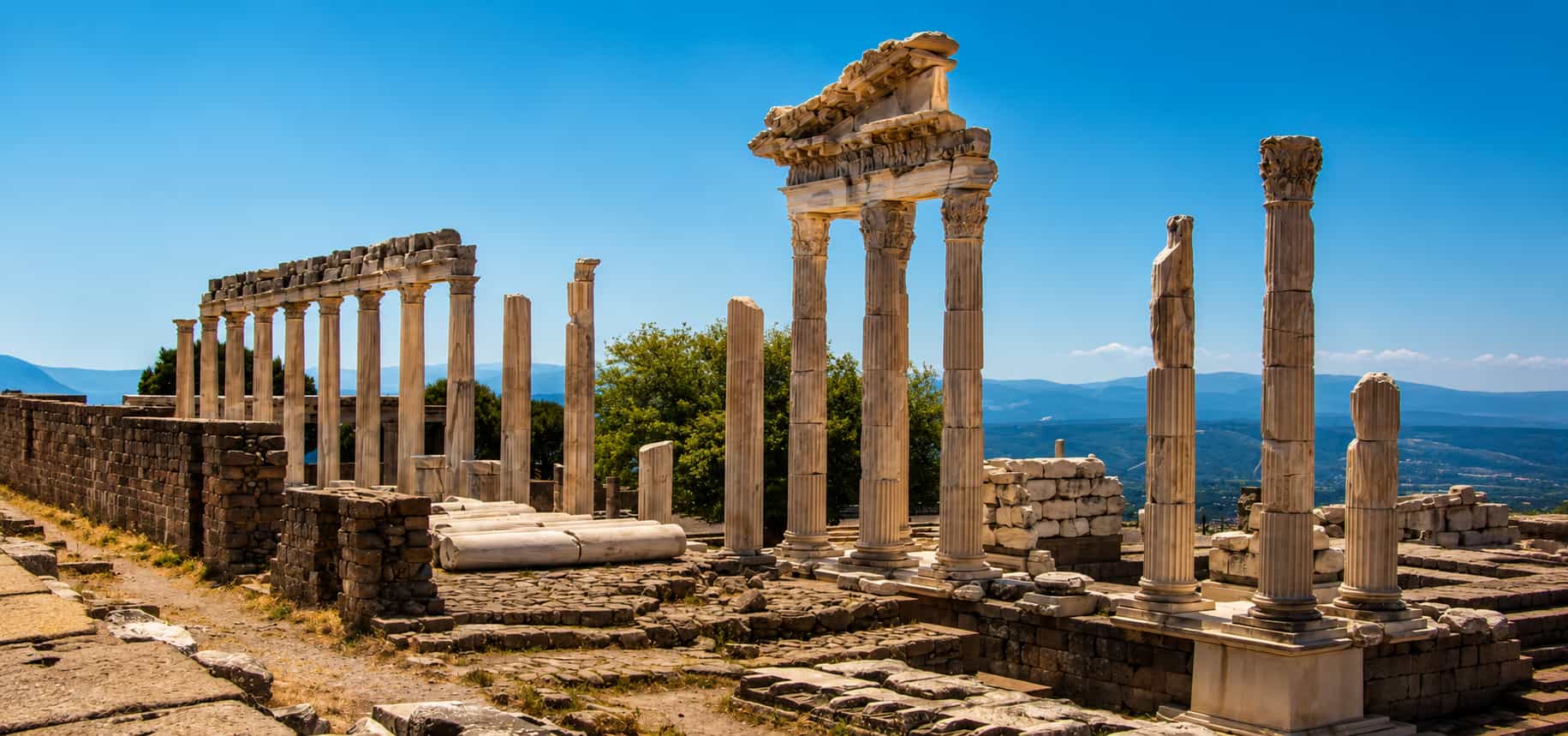
One of the great cities of the Hellenistic world — its theater cut dramatically into a hillside, its library a rival to Alexandria, its healing sanctuary a center of ancient medicine and pilgrimage.
The marble streets, the Library of Celsus, the Great Theatre and the terraced houses that preserve the domestic life of a Roman city in greater detail than almost anywhere else in the world.
White travertine terraces and the Roman spa city built around Turkey's most famous thermal springs — a combination of natural spectacle and ancient heritage found nowhere else.
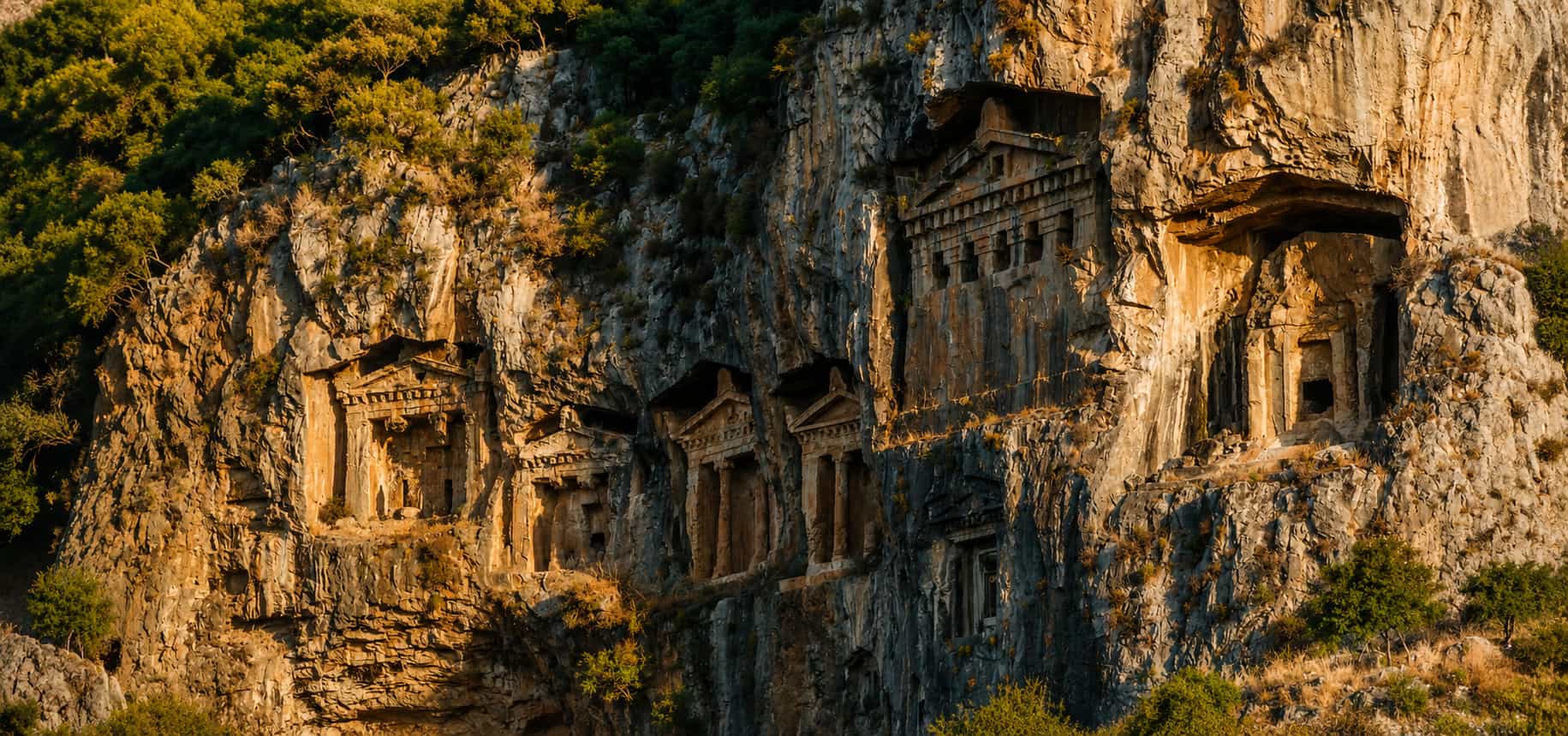
The Lycian civilization built its cities and tombs into the mountains of the southwestern coast. Xanthos, Letöön, Myra — a distinct world that combined Greek, Persian and local traditions into one extraordinary culture.
The Seljuk capital of Anatolia and the home of Rumi. The Mevlana Museum preserves the tomb of one of history's most significant mystic poets — a place of pilgrimage and contemplation for visitors from every tradition.
Two days in a volcanic landscape unlike anything else on earth. Cave churches with Byzantine frescoes, underground cities of extraordinary scale and ingenuity, valleys sculpted by centuries of wind and water.
The capital of the Hittite Empire, whose rediscovery in the early twentieth century revealed a civilization that shaped the ancient Near East as profoundly as Egypt or Mesopotamia.
A UNESCO-listed Ottoman market town preserved with rare completeness — its wooden mansion houses, hans and markets constituting one of the finest surviving examples of late Ottoman urban life in the country.
The mausoleum of Mustafa Kemal Atatürk and the Museum of Anatolian Civilizations, which brings the entire arc of this journey's history together in one extraordinary collection.
A sixteen-day journey through Turkey's defining civilizations and landscapes.
Arrive in Istanbul and transfer to your accommodation. The city reveals itself slowly — the call to prayer echoing across the Golden Horn, the domes and minarets of the Historic Peninsula against the evening sky. Your guide meets you to introduce the journey, answer questions and prepare you for the sixteen days ahead. The first evening is yours.
A full day on the Historic Peninsula with your guide. Begin at Hagia Sophia — not simply as a building but as a document of imperial ambition, theological argument and architectural genius across fifteen centuries. Continue to Topkapi Palace and the Imperial Harem, which opens the world of the Ottoman sultanate and its extraordinary administrative machine. Visit the Basilica Cistern in the afternoon, then the Grand Bazaar. End with Süleymaniye Mosque and the panoramic terrace that looks over the Golden Horn and two continents at once.
Cross the Bosphorus and drive west toward the Dardanelles. The Gallipoli Peninsula unfolds with a quietness that feels intentional. Visit Anzac Cove, Lone Pine Cemetery, Chunuk Bair, the Cape Helles Memorial and the Turkish national memorial at Conk Bayırı. Your guide provides the full historical context of the 1915 campaign — what it meant for the Ottoman Empire, for Mustafa Kemal who commanded the Turkish defense, and for the ANZAC forces whose sacrifice became foundational to the national identities of Australia and New Zealand. This is not a tourism stop. It is one of the most emotionally significant days of the journey.
Drive to Troia — the archaeological site that generations of scholars dismissed as myth until Heinrich Schliemann began excavating in the 1870s. The site contains nine distinct layers of occupation spanning roughly three thousand years, from the early Bronze Age to the Roman period. Your guide explains each layer, the ongoing debates about which level corresponds to the Homeric city, and what the discovery of Troy meant for our understanding of the ancient Aegean world. The famous replica of the Trojan Horse stands at the entrance; the actual archaeology is far more interesting.
Ascend to the Pergamon Acropolis by cable car. The city was one of the most ambitious urban projects of the Hellenistic world — its theater cut into the hillside at an angle so steep that the stage looks directly over the plain below, its library second only to Alexandria's until Mark Antony gave it to Cleopatra. Visit the Asklepion, the ancient healing sanctuary where patients came from across the Mediterranean, and the Archaeological Museum which holds the altar of Zeus whose reliefs are among the masterworks of Hellenistic sculpture.
An extended guided visit to one of the most impressive ancient cities still standing anywhere in the world. Walk the marble-paved Curetes Street past the Library of Celsus, whose facade has been partially reconstructed to give a sense of its original grandeur. Visit the Great Theatre, which seated twenty-five thousand and where Saint Paul is said to have preached. Enter the Terraced Houses — a ticketed additional section that preserves the private rooms, mosaics and frescoes of wealthy Roman citizens with breathtaking completeness. Your guide connects Ephesus to the larger arc of the journey: from Troy through Pergamon to Ephesus, the Aegean coast of Turkey traces the entire arc of Greco-Roman civilization.
Drive inland to Pamukkale, where calcium-rich thermal springs have been depositing white mineral terraces on a hillside for thousands of years. Walk barefoot on the terraces in the morning light. Above them stands Hierapolis, the Roman spa city founded in the second century BC that became one of the ancient world's foremost thermal healing centers. Visit the necropolis — one of the largest ancient cemeteries in Anatolia — and the well-preserved theatre. Swim in the Antique Pool, where Roman columns lie submerged beneath warm mineral water.
Arrive on the Turquoise Coast and settle into your accommodation in Antalya or the surrounding region. The old city of Antalya — Kaleici — is a walled Roman harbor town whose streets still follow their ancient plan. Visit Hadrian's Gate, the Roman triple arch built to commemorate the emperor's visit in 130 AD. In the afternoon, the Antalya Museum provides essential context for what the following day will bring: its collection of Lycian, Hellenistic and Roman material is one of the finest archaeological museum collections in Turkey.
Drive west along the coast toward the heartland of ancient Lycia. Visit Xanthos, the Lycian capital whose story of self-immolation rather than surrender to the Persians was recorded by Herodotus and still resonates through the ruins. Continue to Letöön, the sanctuary of the Lycian Federation where three temples stood in honor of Leto, Artemis and Apollo. In the afternoon, visit Myra — where the rock tombs carved directly into the cliff face remain one of the most visually dramatic sights in the entire country. The Lycian world was neither Greek nor Persian but something distinct: a maritime civilization that produced its own language, its own art and its own remarkable funerary tradition.
Drive north from the coast onto the Anatolian plateau. The landscape shifts dramatically — from the lush Mediterranean pine forests and turquoise coves to the vast, flat, austere interior of Anatolia that stretches to every horizon. Arrive in Konya, the medieval capital of the Seljuk Sultanate of Rum. Visit the Mevlana Museum, which houses the tomb of Jalāl ad-Dın Rumi — the thirteenth-century poet and mystic whose Mathnawi is considered one of the greatest works in the Persian literary tradition and whose influence on Islamic spirituality continues undiminished. Also visit the Karatay Madrasah, the Alāeddin Mosque and the extraordinary Seljuk tile collections that define Konya's visual heritage.
Arrive in Cappadocia to a landscape that requires no preparation and still manages to astonish. The volcanic plateau of central Anatolia was shaped over millions of years by eruptions from three volcanoes, then carved by wind and water into the formations that make this region instantly recognizable. In the afternoon, visit the Göreme Open Air Museum — a monastic complex of rock-cut churches, refectories and hermitages decorated with Byzantine frescoes from the tenth to twelfth centuries. Your guide explains why this landscape became one of the earliest centers of Christian monasticism in the world.
A second day in Cappadocia for deeper exploration. Descend into Derinkuyu or Kaymaklı, one of the region's great underground cities — subterranean settlements of extraordinary engineering depth that once sheltered thousands of inhabitants and their livestock. Walk through the valleys on foot in the afternoon: Pigeon Valley, Rose Valley or the fairy chimney fields of Devrent, where the landscape takes forms so improbable that they feel like the product of imagination rather than geology. An optional hot air balloon flight can be arranged for early morning, weather permitting — arguably the finest way in the world to witness a landscape from above.
Drive to Boğazköy and the ruins of Hattusa, capital of the Hittite Empire from approximately 1650 to 1200 BC. The Hittites were for centuries a mystery — known only from Egyptian records as a rival empire — until their capital was excavated in the late nineteenth and early twentieth centuries and their language deciphered. Visit the Great Temple, the royal quarters, the Lion Gate and the Sphinx Gate. Walk the section of reconstructed city wall. Stand at the Sphinx Gate and understand that you are standing inside a city that negotiated the world's first recorded peace treaty — the Treaty of Kadesh, signed between the Hittite king Hattusili III and Ramesses II of Egypt — a document whose UN translation hangs in the lobby of the United Nations building in New York.
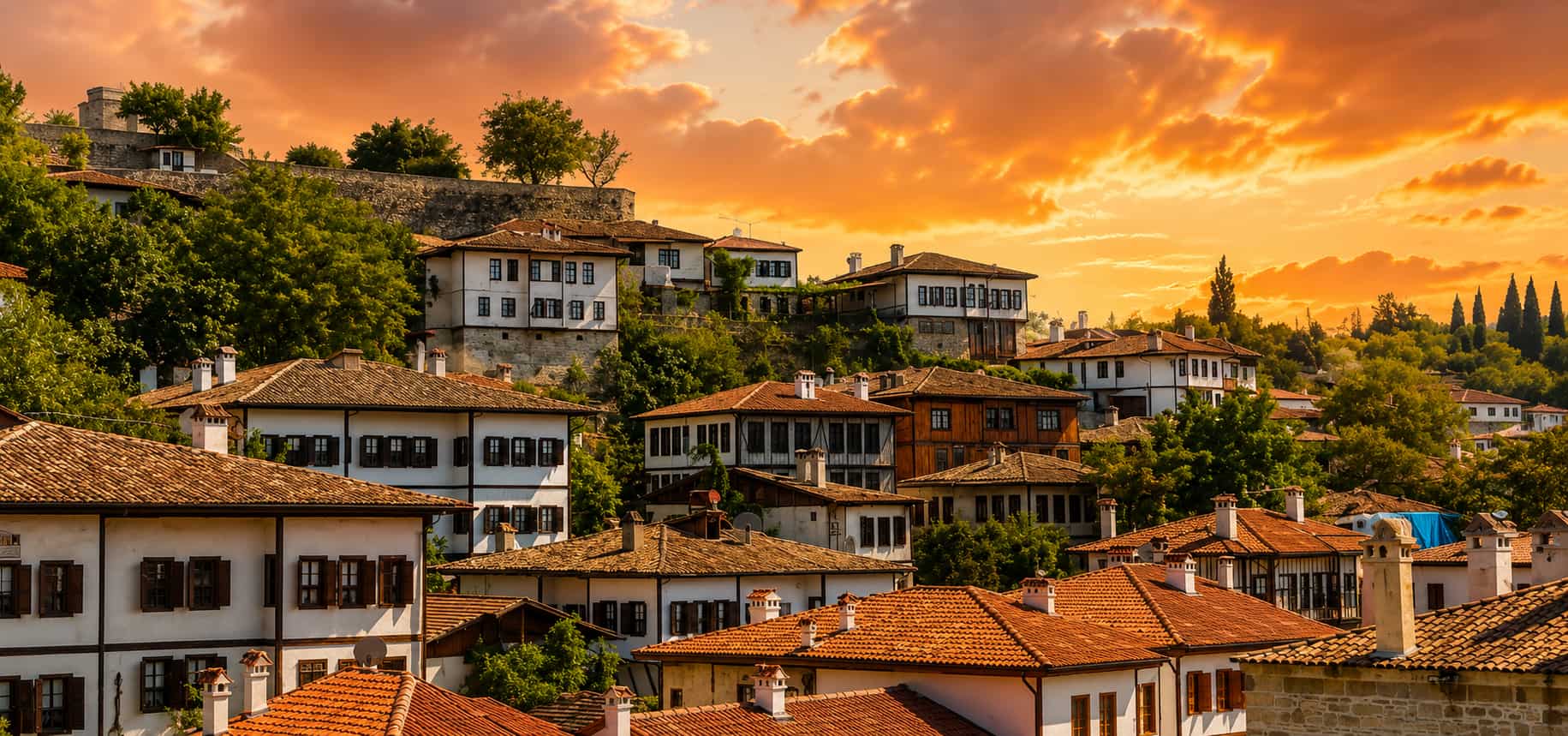
Drive to Safranbolu, a market town in the Black Sea mountain foothills that was an important stop on the caravan routes that connected Istanbul to the Iranian plateau. When the railway bypassed the town in the nineteenth century, Safranbolu was effectively preserved in amber. Its old quarter contains the finest concentration of late Ottoman civilian architecture in Turkey — timber-framed mansions with projecting upper storeys, covered markets, hans and mosques arranged around a central bazaar in the manner unchanged since the seventeenth century. Walk the streets, visit a restored Ottoman house, take tea in a traditional coffeehouse. UNESCO listed the town in 1994.
Drive south to Ankara, capital of the Turkish Republic since its founding in 1923. Visit Anıtkabir — the mausoleum of Mustafa Kemal Atatürk, completed in 1953. The building is one of the most significant works of monumental architecture in the twentieth century: an open-air processional space flanked by towers and colonnades, leading to the tomb of the man who created modern Turkey from the ruins of the Ottoman Empire. The attached museum tells the story of the War of Independence and the republican revolution with remarkable directness. Then visit the Museum of Anatolian Civilizations, which gathers the material culture of every civilization you have encountered on this journey into one extraordinary space — from Paleolithic tools to Hittite reliefs to Phrygian bronzes to Greek ceramics.
Complete the circuit with arrival in Istanbul. Depending on your flight schedule, the final day can include additional time in the city — a visit to a neighbourhood not covered on Day 2, a reservation at a restaurant your guide recommends, or simply a few hours on the Bosphorus. Your guide ensures a smooth and unhurried conclusion to the journey. Airport transfer is included.
16 Days / 15 Nights • Istanbul • Gallipoli • Troy • Pergamon • Ephesus • Pamukkale • Mediterranean • Konya • Cappadocia • Hattusa • Safranbolu • Ankara
The Complete Anatolian Odyssey is offered as a private journey only. Given its length, depth and the pace required to do justice to each destination, we do not run this as a shared group experience. The vehicle, the guide and the itinerary are entirely yours. The pace can be adjusted as you travel.
The pace is moderate throughout. Most days involve two to four hours of walking, often on uneven archaeological surfaces. Some sites — particularly Pergamon and Cappadocia valley walks — involve inclines, but there are no strenuous climbs required. Comfortable footwear is essential. If you have specific mobility requirements, please share them when booking so we can plan accordingly.
We select properties for their character, location and standard — typically boutique hotels and carefully chosen smaller properties rather than large international chains. In Cappadocia, this means a cave hotel. In Safranbolu, a restored Ottoman mansion. In coastal regions, properties with access to the landscape. Specific accommodation recommendations are discussed during the planning stage and can be adjusted to your preferences and budget.
A private air-conditioned vehicle and professional driver are available throughout the entire journey. All transfers between cities, to sites and between accommodations are included. The drive times between destinations range from one to five hours and are managed to leave maximum time at each stop. Long drives are timed to morning or evening where possible. The vehicle is yours for the full sixteen days.
Spring (April through early June) and autumn (September through October) are the ideal windows. Temperatures across the route are moderate, the light is exceptional for the archaeological sites and the balloon flights in Cappadocia are most reliable. July and August are very hot at Ephesus, Pamukkale and the Mediterranean coast. Cappadocia is accessible year-round but can be cold in winter. Gallipoli is most meaningful to visit around ANZAC Day in April but can be visited at any time of year.
This journey is designed for travelers who want to understand Turkey rather than simply visit it — people who are genuinely curious about history, civilization and landscape, who prefer depth over speed, and who want to come away with a coherent story of a country rather than a collection of photographs. It is suitable for couples, small family groups and solo travelers. Prior knowledge of Turkish history is not required — the experience is designed to provide it.
